





Improvisation Labs
Three Approaches to Developing a Personal Improvisational Language
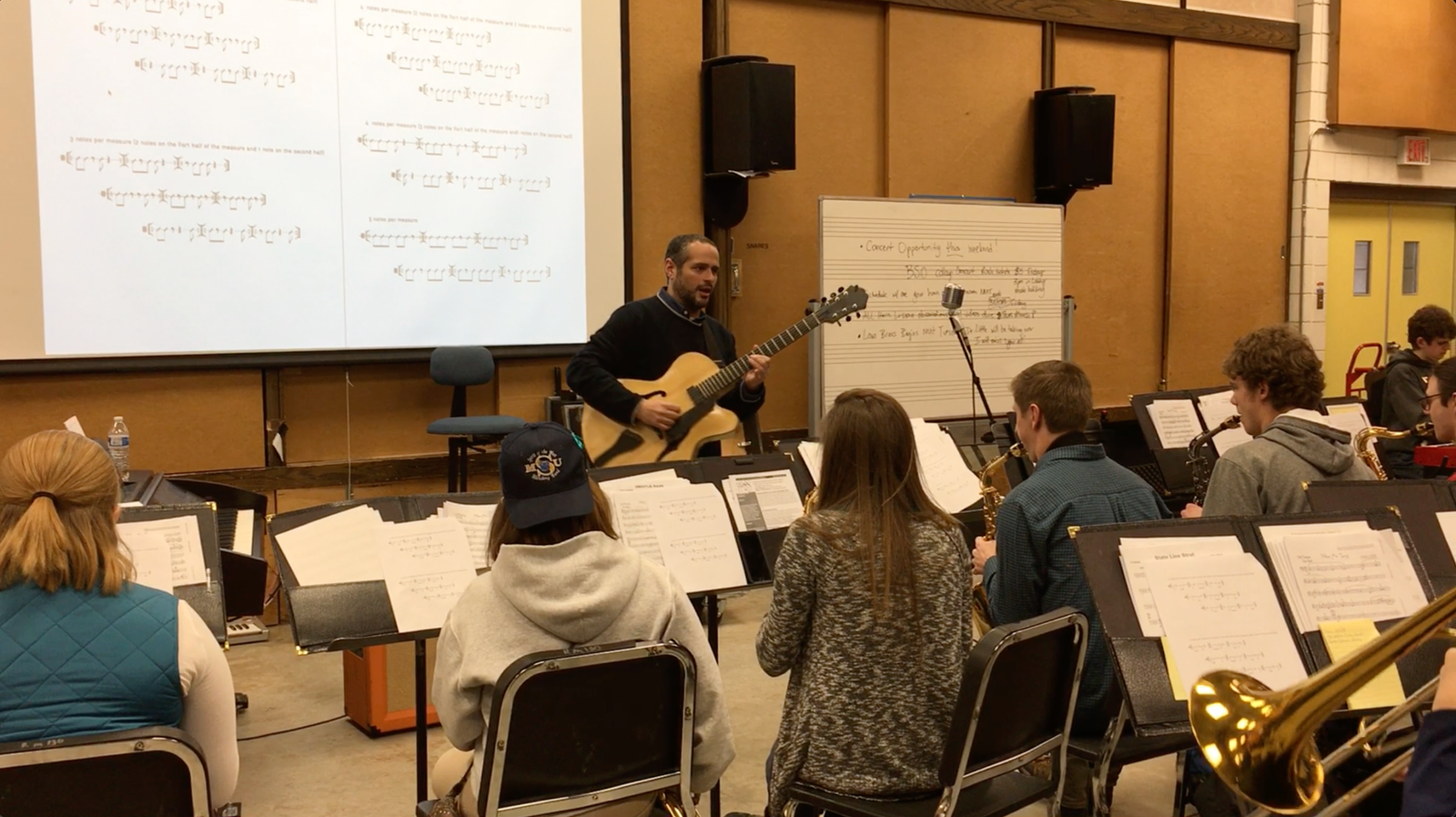
Pedro Barboza’s Improvisation Labs explore improvisation as a form of musical discourse: a process of listening, organizing and transforming musical material in real time.
The three programs approach improvisation from different but complementary perspectives — melodic function, motif development, and rhythm — with a shared goal: helping musicians build improvised ideas with greater intention, direction and personal identity.
Each lab can be presented independently or combined into a longer intensive or Visiting Artist program.
A Shared Approach
Improvisation is often taught through scales, harmonic formulas or accumulated vocabulary. These workshops take a different route.
The focus is on understanding how musical material behaves and how that understanding can become a practical creative tool.
Participants work with fundamental elements such as:
melodic function · intervallic material · motifs · rhythmic identity · phrasing · tension and release · voice-leading · target notes
The objective is not simply to generate more notes, but to develop a clearer sense of why a line works, how an idea can be developed, and how musical identity can emerge through improvisation.
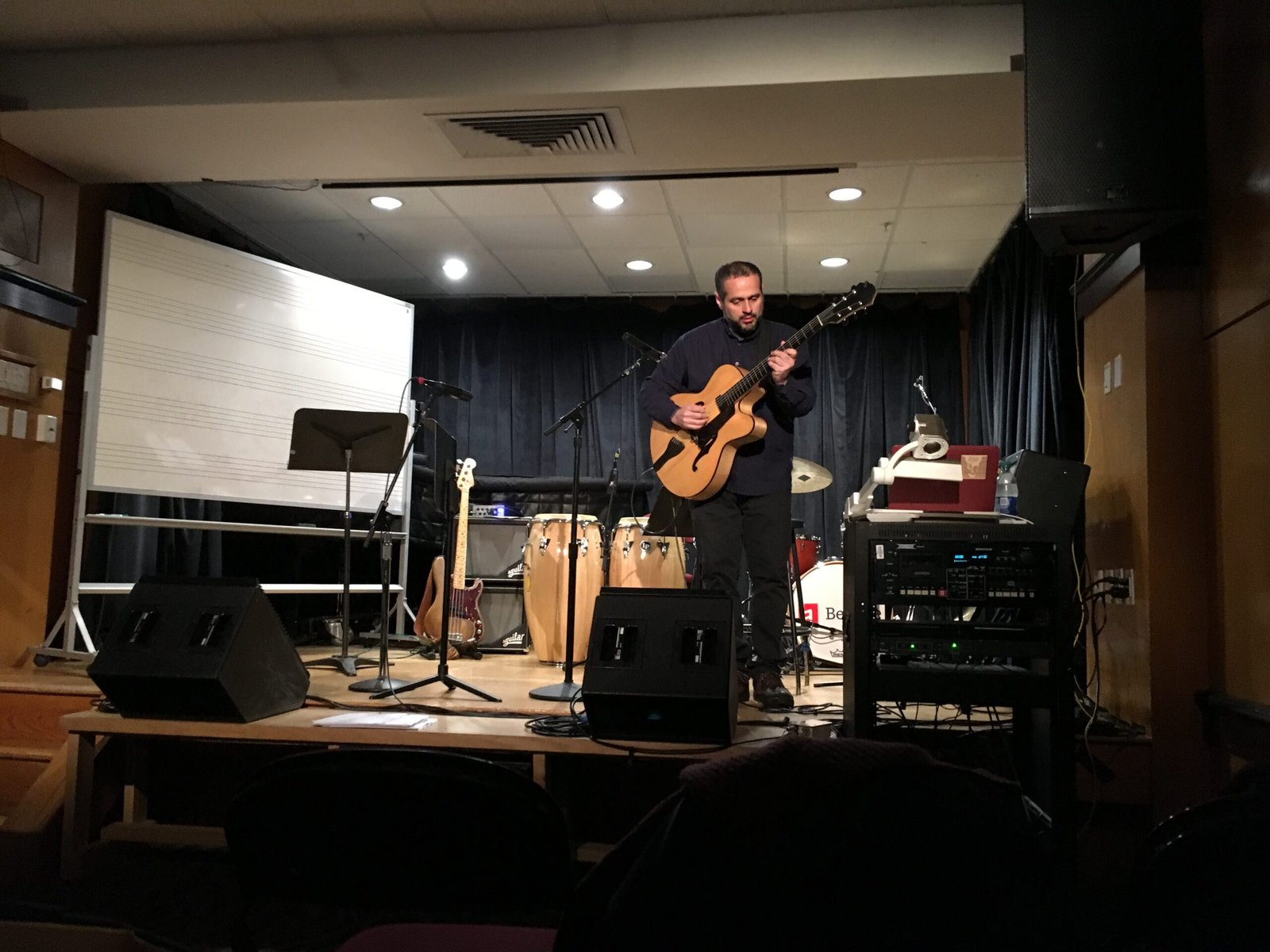
The Art of Improvisation
Melodic Analysis as a Creative Tool
How does a melodic line work?
This workshop uses melodic analysis as a practical method for understanding and building improvised discourse.
Participants examine the role of different notes within a phrase, distinguishing between primary notes — tones that create stability, definition and destination — and secondary notes, which create motion, connection and tension.
The work includes:
chord tones · passing notes · tensions · chromatic approaches · target notes · chord of the moment · voice-leading
Rather than approaching improvisation as a sequence of scales or patterns, students learn to understand how melodic lines function and how to use that understanding to shape their own improvisations.
What participants develop
- Greater awareness of melodic function
- Clearer control of tension and release
- More intentional use of chord tones, passing notes and tensions
- Stronger sense of direction in improvised lines
- A practical method for analyzing and constructing melodic discourse
Ideal for: students who want to understand why a melodic line works and how to improvise with greater clarity and direction.
Three-Note Motives
Intervallic Material, Motif Development & Improvised Language
How much music can be created from three notes?
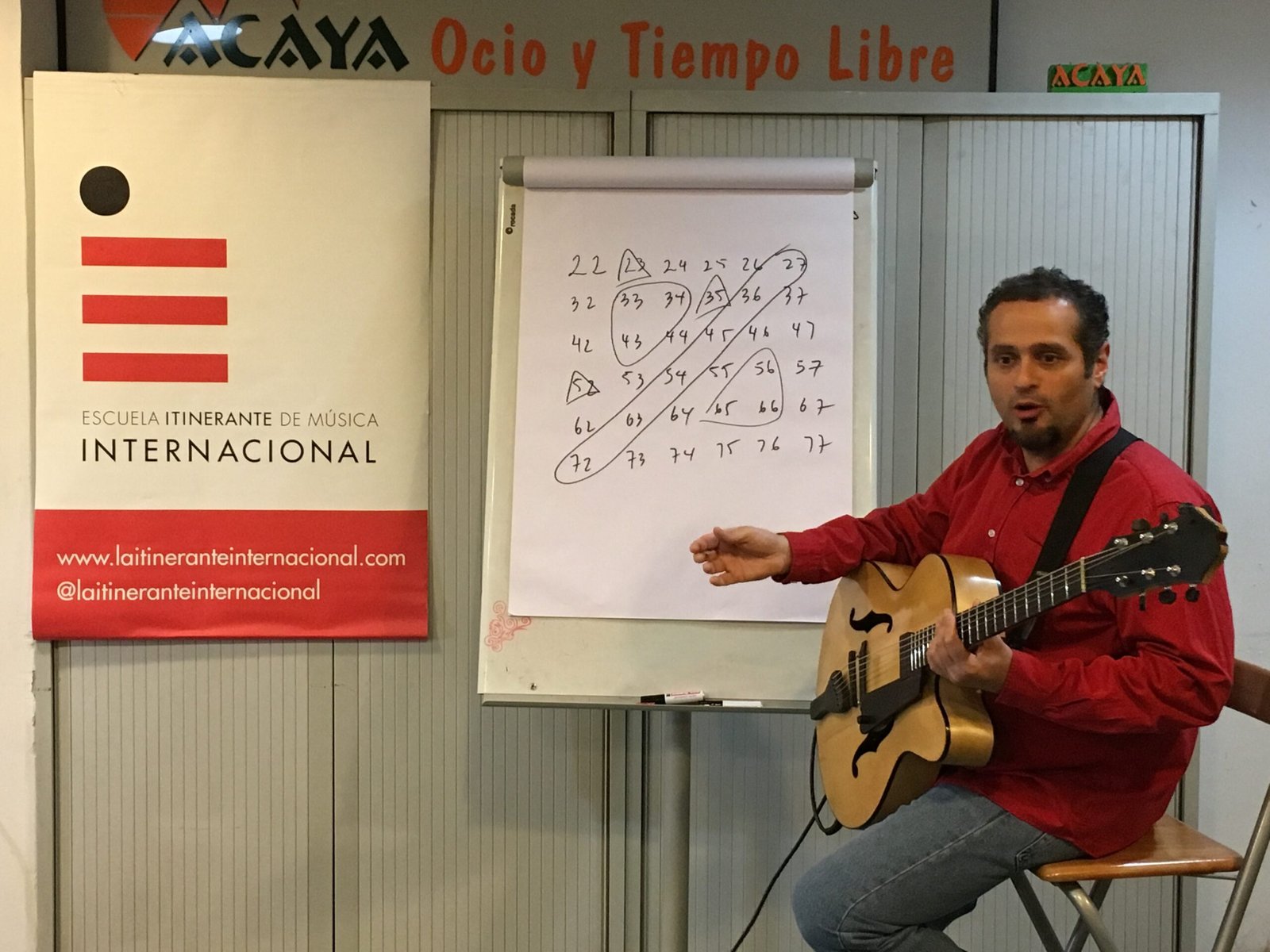
This lab explores the creative possibilities that emerge from working with deliberately limited material.
The process begins with diatonic intervals and three-note combinations. These cells are then organized into different sound families, including:
closed and open triads · seventh-chord structures · quartal and quintal formations · clusters
From there, participants explore how a small musical cell can be transformed through:
rhythm · register · articulation · repetition · displacement · variation · development
The goal is to move away from the idea that improvisation depends on constantly generating new material. Instead, participants learn how a limited idea can become the basis for a coherent and personal improvised language.
This workshop draws on concepts developed by Jon Damian in The Palette Chart, expanded here through Pedro Barboza’s practical application to motif development and improvisation.
What participants develop
- Stronger intervallic awareness
- Practical use of three-note cells as creative material
- Recognition of different sound families
- Greater control of motivic development
- More coherent and memorable improvised ideas
Ideal for: improvisers and composers interested in generating more musical possibilities from limited material.
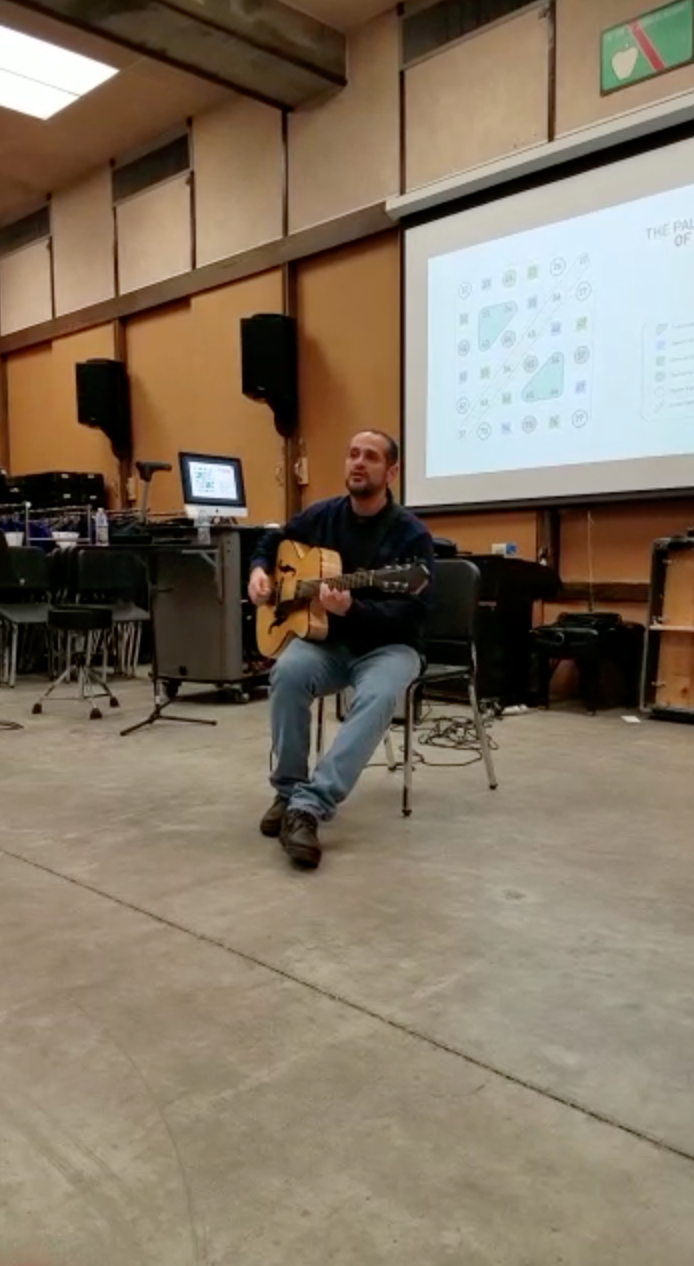
Rhythm & Improvisation in Afro-Venezuelan Music
Berklee College of Music · 2018
How can rhythm become part of an improviser’s language?
This masterclass explores the relationship between Afro-Venezuelan rhythmic traditions and the development of improvised language.
The work begins with listening and understanding selected rhythmic patterns, accents and musical characteristics. Participants then explore how these elements can influence phrasing, articulation, melodic construction and the development of improvised ideas.
Rhythm is approached not simply as accompaniment or groove, but as a source of musical identity and creative material.
The session connects:
cultural context · rhythmic cells · accent patterns · phrasing · improvisation · personal language
What participants develop
- Greater awareness of rhythmic identity
- Practical ways to integrate rhythmic material into phrasing
- Stronger connection between rhythm and melodic invention
- Understanding of how traditional materials can inform contemporary improvisation
- Tools for developing an improvised language with greater cultural and musical specificity
Ideal for: musicians interested in rhythm, Latin American music, Afro-Venezuelan traditions and the relationship between cultural identity and improvisation.
Three Different Entry Points
Melodic Function
How does a melodic line work?
The Art of Improvisation
Motif Development
How much can you create from three notes?
Three-Note Motives
Rhythm & Identity
How can rhythm become part of your improvisational language?
Rhythm & Improvisation in Afro-Venezuelan Music
Each program addresses a different aspect of improvisation while sharing a common objective: helping musicians develop a more conscious, flexible and personal creative language.
Formats
Masterclass
A focused presentation combining musical examples and live demonstration.
Typical duration: 60–90 minutes
Suitable for larger groups and lecture-style settings.
Workshop
A more participatory session in which students apply selected concepts directly to their own playing.
Typical duration: 2 hours
Extended Creative Lab
A longer format allowing deeper practical work, individual participation and guided experimentation.
Typical duration: up to 3 hours
Programs can be adapted according to the level, instrumentation and academic context of the participants.
Combine the Labs
The three programs can also be combined into a broader improvisation intensive.
Examples include:
One-Day Improvisation Intensive
- Morning
- The Art of Improvisation — Melodic Analysis
- Afternoon
- Three-Note Motives — Motif Development
Multi-Session Improvisation Program
- Session 1
- Melodic Function
- Session 2
- Motif Development
- Session 3
- Rhythm & Improvisation
This format is particularly suitable for conservatories, universities, jazz programs and Visiting Artist residencies.
Who is it for?
The Improvisation Labs can be adapted for students and musicians working in:
Jazz · Improvisation · Composition · Guitar · Contemporary Music · Performance · Latin American Music
The sessions can be delivered in English or Spanish.
They do not require a specific ensemble or instrumentation unless the host institution wishes to organize a more participatory workshop format.
About Pedro Barboza
Pedro Barboza is a Venezuelan guitarist, composer and educator based in Madrid.
His educational practice spans more than three decades and connects improvisation, composition, rhythm, musical analysis and the development of personal creative language.
He has presented masterclasses, workshops and Visiting Artist programs in Europe, the United States and Latin America, including activities at Berklee College of Music, Montana State University, Conservatori Liceu, ESMUC and other institutions.
A Berklee College of Music alumnus and founder of Escuela Itinerante de Música, his teaching work focuses on turning musical knowledge into practical tools for creative development.
Visiting Artist Option
The Improvisation Labs can be presented as individual sessions or incorporated into a broader Visiting Artist Program.
Programs can be developed for one or several days according to the academic and artistic interests of the host institution.
A residency can combine:
Masterclasses · Workshops · Creative Labs · Student Sessions · Artist Talks · Concerts
Bring an Improvisation Lab to your institution
Each program can be presented independently or combined into a longer workshop, intensive or Visiting Artist residency.
Bookings open for the 2026–27 season and beyond.
Write to me directly
Tell me what you have in mind and I will reply with a proposal adapted to your institution.